Enterprise integrations
Current API source catalogs Enterprise integrations with two child groups: Segment has one tracking field, and Spoonity has enablement, platform-name, and vendor-identifier fields. These associations do not prove a returned category, configured value, provider connection, or deployment.
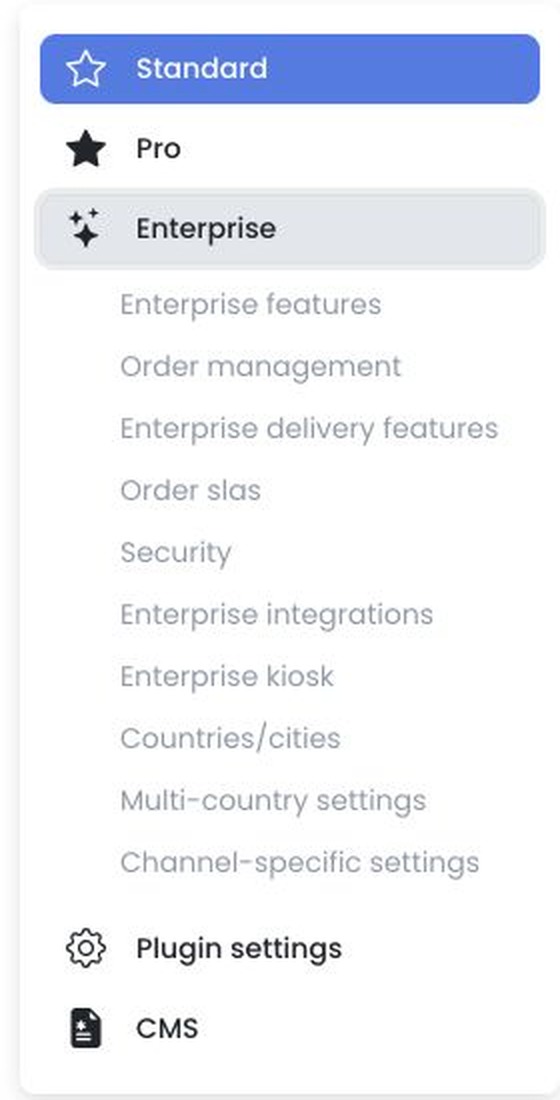
Catalog boundary
The preserved labels are historical fixture evidence. No identifier, credential, endpoint, account, connection state, analytics event, loyalty record, user, order, webhook, or external response was read.
Dashboard renders categories/configs returned for the current project. Numeric IDs and values are runtime data; provider names in source do not establish availability or permission.
Source-only integration boundary
Selecting the group or category performs authenticated reads, so runtime navigation and GET/HEAD remain blocked. Do not open fields, copy values, invoke provider flows, or use Save, webhook, API-key, sync, analytics, loyalty, or authentication actions for documentation evidence.
The shared editor stages ordinary changes until Save, then writes configs sequentially; later failure can follow earlier persistence. No request or external handoff was executed.
Integration settings can contain identifiers, credentials, endpoints and connection state. Reads/writes can affect authentication, loyalty, analytics, users, orders, payments, webhooks, jobs or outbound traffic. These are blocked risk classes, not verified effects.
What this page does not cover
The legacy Developers surface is separate from Enterprise returned categories. This article does not authorize or document plugin, webhook, API-key, credential, or provider-management operations.
Safe evidence
Retain the existing navigation-only image. Any future evidence requires provider-owner approval, an isolated synthetic project, placeholder identifiers, intercepted requests, blocked outbound traffic, and immutable per-effect receipts.
Troubleshooting
Why is a category or provider missing?
Source requires level 0, Enterprise plan state, and returned Enterprise categories. A missing category does not identify entitlement, billing, provider, configuration, or deployment cause.
Why should I not test Save in production?
Source defines sequential config writes with possible partial persistence and downstream external effects. Because no immutable provider/deployment receipt exists, runtime and all effect-success claims remain blocked.
Related guides: Enterprise settings · Developers · Settings overview